Building and Pest Inspection Red Flags Every Sydney Buyer Must Spot
Uncover critical building and pest inspection red flags in Sydney properties. Identify structural cracking, subterranean termites, rising damp, and roof defects.
A freshly painted facade, stylish modern staging, and pristine interior finishes can easily mask severe structural and environmental defects in a Sydney home. Purchasing real estate without commissioning a comprehensive, independent Building and Pest Inspection is a gamble that can result in six-figure rectification bills. Knowing what critical defects to look for allows you to negotiate repairs, adjust your offer price, or walk away before exchanging contracts.
1. Structural Movement and Differential Settlement
Minor hairline cosmetic settlement cracks are normal in aging homes, but stepped diagonal cracking exceeding 3mm in brickwork or concrete slabs indicates serious foundation movement. In Sydney, reactive clay soils often expand during wet seasons and contract during droughts, causing differential settlement.
Pairing structural findings with thorough legal due diligence as detailed in our guide on conveyancing and contract review essentials before you sign in NSW gives you the contractual power to request vendor rectification or price reductions prior to binding exchange.
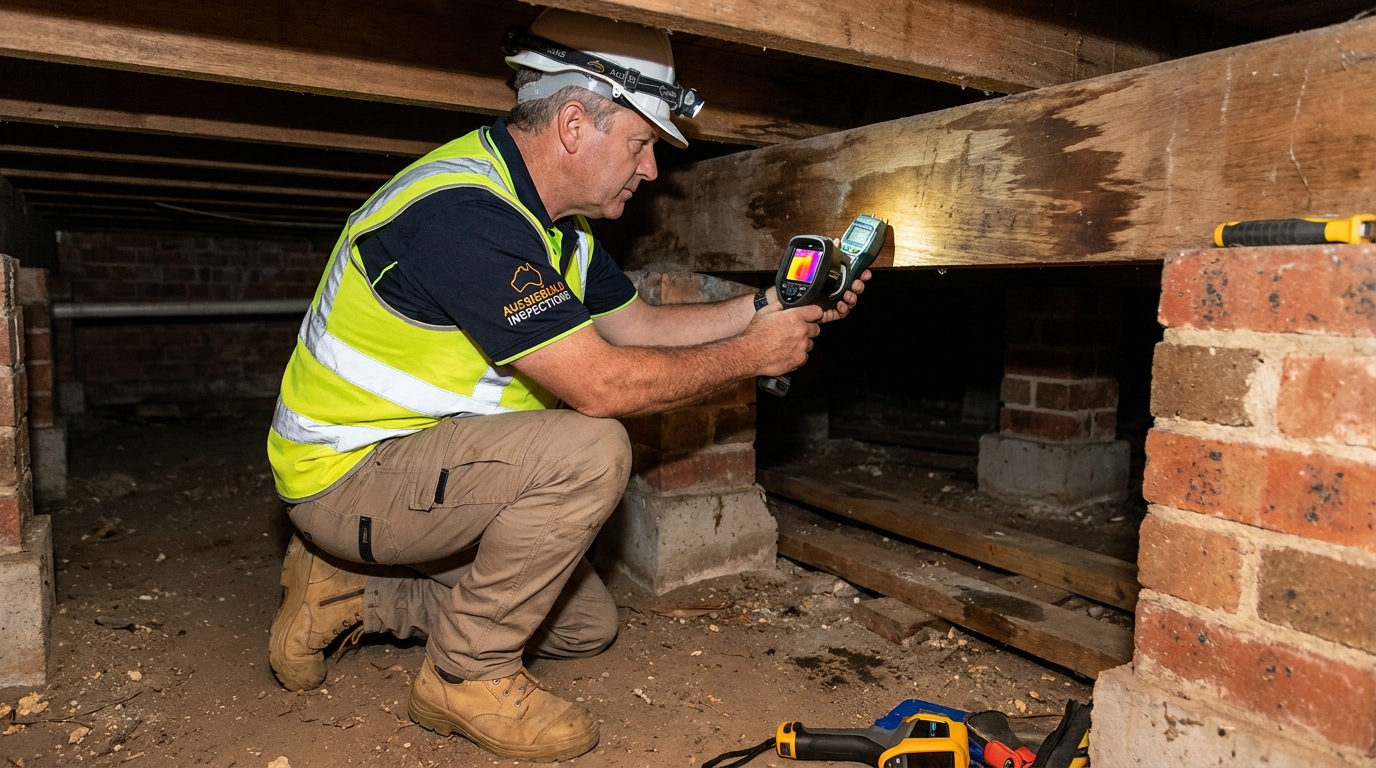
Thermal moisture meters and visual acoustic sounding detect concealed structural decay and pest activity.
2. Subterranean Termites and Timber Pest Decay
Termites are a widespread threat across Greater Sydney, particularly in leafy enclaves with mature gum trees and moist sub-floors. Subterranean termites hollow out structural timber wall studs, floor joists, and roof rafters from the inside out, often leaving no outward sign until structural failure occurs.
Inspectors use thermal imaging cameras and acoustic sounding tools to detect live pest nests and assess past termite damage. If past damage is noted, request written evidence of a certified chemical barrier installation complying with Australian Standard AS 3660.
3. Rising Damp and Waterproofing Failures
Older Victorian and Federation homes frequently suffer from deteriorated damp-proof courses (DPC), allowing moisture from the earth to wick upwards through porous brickwork. In apartments, leaking internal shower trays and failed balcony membrane waterproofing represent the leading cause of multi-residential strata disputes and costly special levies.
Integrating professional inspection milestones into your broader acquisition plan, as outlined in our step-by-step search and negotiate walkthrough, ensures that no building report is left unscrutinized.
4. Roof Plumbing, Guttering, and Asbestos
Roof defects—including cracked terracotta tiles, rusting valley gutters, and inadequate stormwater fall—can lead to chronic water penetration into ceiling cavities. Furthermore, homes built prior to 1990 commonly contain bonded asbestos sheeting in eaves, wet-area wall linings, and sub-floor areas, requiring licensed specialist remediation if renovations are planned.
Sub-floor Ventilation: Inadequate airflow beneath floorboards creates optimal breeding conditions for wood-rot fungi and termites.
Electrical Wiring: Outdated cotton-sheathed or vulcanized Indian rubber (VIR) wiring presents an immediate fire hazard requiring full rewiring.
Plumbing Pressures: Low water pressure or rusted galvanized piping signals substantial pipe replacement costs.
Official building standards published by NSW Fair Trading emphasize that buyers must engage inspectors who carry current professional indemnity insurance.
Conclusion: Invest in Certainty
A to pre-purchase building and pest inspection is the most cost-effective insurance policy you will ever buy. Beyond identifying immediate defects, a detailed inspection report provides an objective roadmap for anticipated capital expenditures over the first three to five years of ownership, allowing you to budget for roof maintenance, sub-floor ventilation upgrades, or chemical termite barrier renewals. Browse our full First Home Buyer / Legal & Settlement library to protect your property purchase.