Rental Yield vs Capital Growth: Balancing Your Sydney Portfolio
Balance cash flow and capital appreciation in your Sydney property portfolio. Learn how to calculate gross vs net yield and target high-growth corridors.
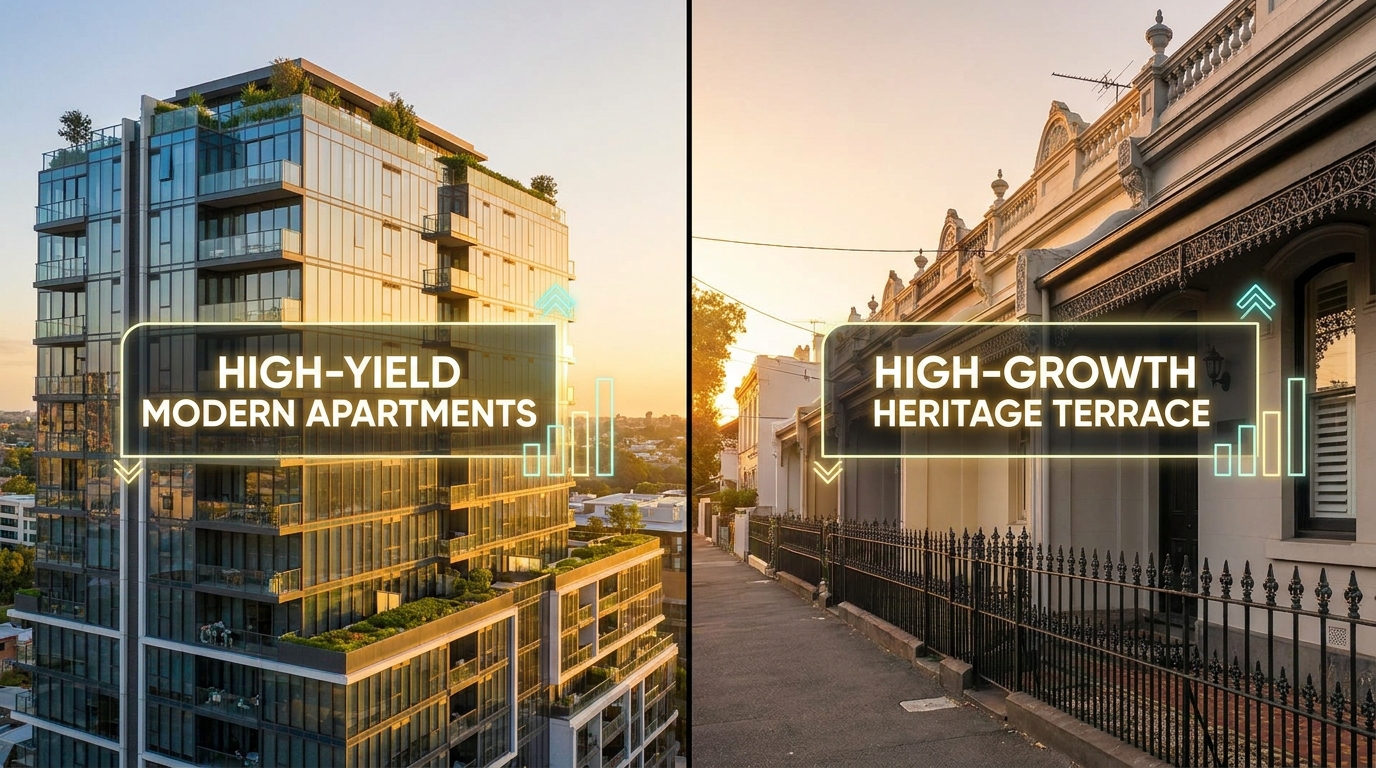
Every property investment strategy in Australia eventually confronts the classic dilemma: should you prioritize high ongoing rental yield or maximize long-term capital growth? While high-yielding regional assets may provide immediate positive cash flow, land-scarce metropolitan hubs like Sydney historically deliver the substantial compounding capital gains necessary to build enduring multi-generational wealth.
Calculating Gross vs Net Rental Yield
Before assessing any prospective investment, you must distinguish between gross rental yield and true net yield:
Gross Rental Yield: Annual rental income divided by the property purchase price, expressed as a percentage. A ,200,000 apartment generating /week (,600/year) reflects a gross yield of 3.47%.
Net Rental Yield: Accounts for recurring ownership costs, including council rates, water rates, strata levies, property management fees (typically 5% to 7% plus GST), landlord insurance, and routine maintenance outlays. Net yield often sits 1.0% to 1.5% below gross figures.
Cash Flow Buffer Modeling: Smart investors model net yield assuming a 10% increase in strata levies or a 4-week vacancy buffer to stress-test holding resilience.
Balancing high rental yield against land-scarce capital growth is central to portfolio longevity.
Why Capital Growth is the Engine of Wealth Creation
While cash flow sustains a portfolio in the short term, capital appreciation builds real net worth. Consider a ,500,000 Sydney residence achieving a conservative 6.5% compound annual growth rate. Over ten years, that single asset increases in value to over ,800,000—creating ,300,000 in gross equity.
Generating that equivalent volume of capital purely through surplus rental yield would require hundreds of thousands of dollars in pre-tax tenant cash flow, which is virtually impossible in prime residential sectors with standard loan leverage.
Savvy Australian investors avoid treating yield and growth as mutually exclusive. A balanced approach targets properties with strong underlying land value (driving capital growth) while incorporating features that optimize tenant appeal, such as proximity to metro transport, lock-up garages, or value-add cosmetic renovation potential that lifts rental returns.
Additionally, selecting properties in high-demand school catchments or thriving employment nodes provides downside rent protection, keeping tenant vacancy rates negligible even during periods of broader economic softening.
Independent demographic research from the Reserve Bank of Australia (RBA) indicates that population growth and supply restrictions remain the principal structural determinants of sustained residential capital appreciation across major capital cities.
Summary: Define Your Strategy First
Aligning your purchase with your current income phase, risk tolerance, and borrowing horizon ensures sustainable investing without financial strain. High-growth assets suit investors with surplus earned income, while higher-yielding assets provide essential cash flow buffers during periods of rising interest rates. Explore our complete suite of investment guides in the Investment Property Strategy category to refine your acquisition blueprint.