Tax Depreciation Schedules: Maximizing Deductions on New vs Old Builds
Learn how tax depreciation schedules work for Australian property investors. Understand Division 40 plant & equipment vs Division 43 capital works deductions.
For Australian property investors, property tax depreciation represents one of the most powerful—yet frequently underutilized—tools for maximizing net annual cash flow. Unlike mortgage interest or strata fees that require ongoing cash outlays, depreciation is a legally sanctioned ‘non-cash deduction,’ allowing you to claim tax relief on the gradual wear and tear of a property’s building structure and installed fixtures without spending an additional dollar.
The Two Core Components of Property Depreciation
Australian tax legislation divides property depreciation into two distinct statutory categories under the Income Tax Assessment Act 1997:
Division 43 (Capital Works Deductions): Covers the structural elements of the building itself, including concrete foundations, brickwork, load-bearing timber framing, tiled roofs, and permanent built-in cabinetry. Deducted at a flat rate of 2.5% per annum over 40 years from completion.
Division 40 (Plant & Equipment): Encompasses removable mechanical and electrical fixtures such as air conditioning units, hot water systems, ovens, dishwashers, window blinds, security alarms, and carpets, depreciated based on their statutory effective operational lifespan.
When combined with ongoing rental yields as explained in our guide on negative gearing in Australia: tax benefits and cash flow realities, depreciation deductions can transform a cash-flow-negative asset into a cash-neutral or positively geared holding on an after-tax basis.
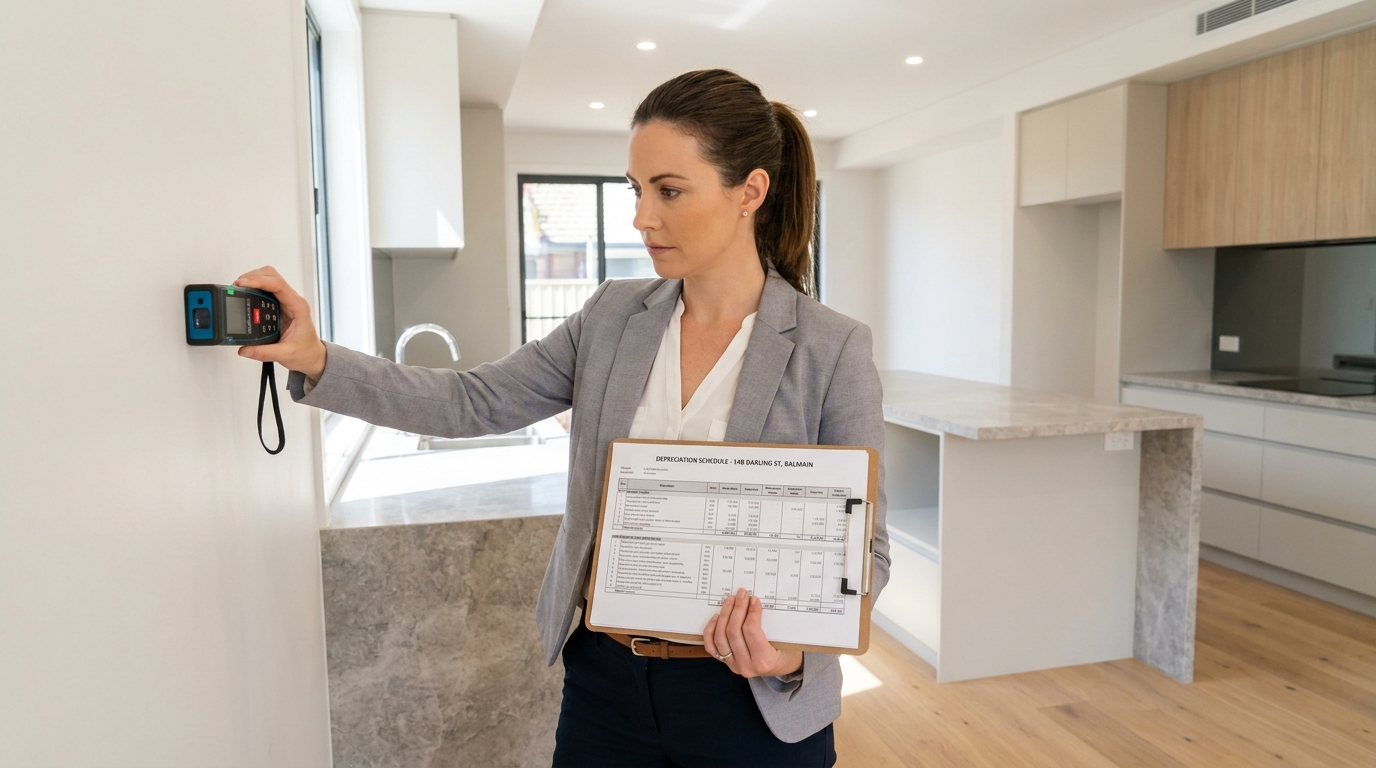
A qualified quantity surveyor provides a comprehensive 40-year schedule detailing all allowable deductions.
New vs Established Properties: The 2017 Regulatory Shift
Investors must note a critical legislative reform enacted in 2017. For residential properties acquired second-hand after May 9, 2017, investors can no longer claim depreciation on previously existing Division 40 plant and equipment fixtures. However, you can still claim full Division 43 Capital Works deductions (provided the building was constructed after September 1987) as well as depreciation on any brand-new fixtures you personally install or renovate.
For brand-new properties (off-the-plan or newly built homes), investors can claim full deductions across both Division 40 and Division 43, often generating upwards of ,000 to ,000 in total deductions during the first full financial year of ownership.
Even for older properties, historical capital renovations undertaken by previous owners—such as kitchen refurbishments or bathroom additions—can be surveyed and deducted under Division 43, making an inspection report well worthwhile.
Under ATO guidelines, investors cannot estimate construction costs themselves. You must engage an accredited Quantity Surveyor certified by the Australian Institute of Quantity Surveyors (AIQS). A professional survey report typically costs between and €”a fee that is itself 100% tax deductible in the financial year incurred. A comprehensive schedule remains valid for up to forty years, itemizing deductions under both prime cost and diminishing value methods to align with your personal taxation strategy.
Important Regulatory and Legal Disclosures
Depreciation deductions eventually interact with your cost base upon property sale, impacting final capital gains tax calculations. All content published by MSC Property Advisory is general editorial guidance and should be verified with a registered tax agent. Review our complete Terms of Use & Disclaimer for regulatory compliance information.