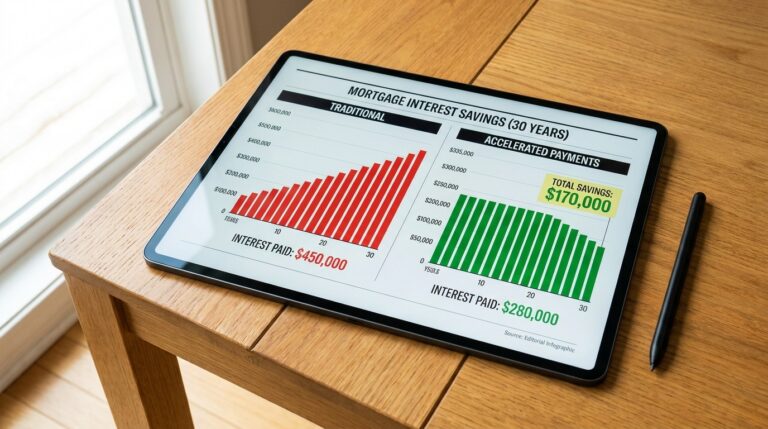
When preparing to purchase property in Sydney, many buyers assume their borrowing power equals their gross income minus basic living expenses. However, Australian mortgage lenders operate under strict statutory assessment frameworks mandated by the Australian Prudential Regulation Authority (APRA). Understanding how banks calculate your debt serviceability allows you to structure your financial profile effectively before submitting a formal credit application, avoiding unexpected rejections.
The 3.0% APRA Serviceability Buffer
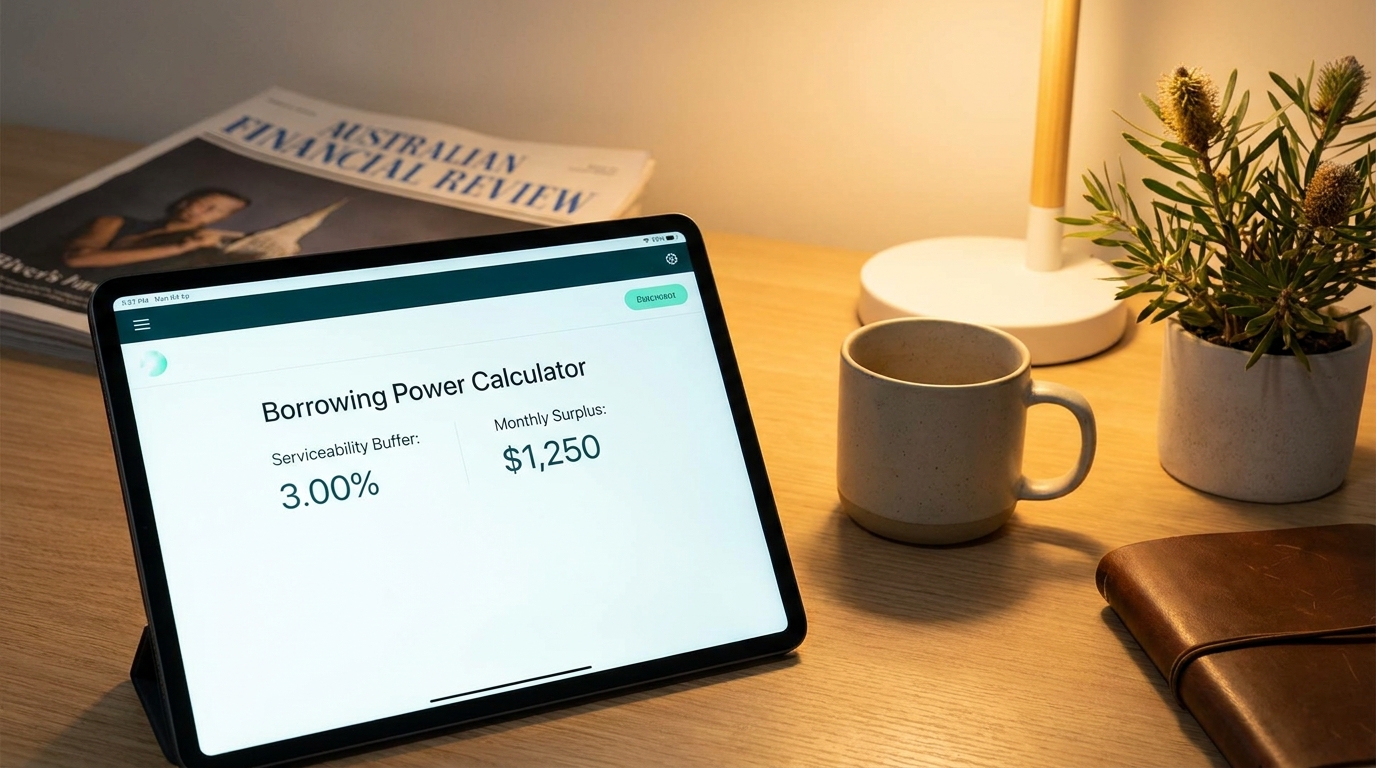
The single most influential factor governing your borrowing capacity is the mandatory APRA serviceability buffer. Lenders are legally required to assess your ability to repay a loan not at the actual interest rate you will pay, but at the contract rate plus an additional 3.0% stress test buffer.
For example, if your mortgage rate is quoted at 6.20%, the bank evaluates your monthly repayments as if your rate were 9.20%. On an ,000 loan, this increases the assessed monthly repayment burden by over ,600, significantly reducing the total principal a bank will approve for a given income level.
To avoid costly surprises before signing contracts, completing our step-by-step framework in the mortgage pre-approval playbook for Sydney buyers ensures your conditional financing is verified prior to open home inspections.
Australian banks evaluate borrowing capacity using strict serviceability buffers and benchmark expenditure models.
Household Expenditure Method (HEM) vs Actual Expenses
Lenders do not rely solely on the self-reported living expenses listed on your application form. Under responsible lending obligations, underwriters benchmark your declared outlays against the Household Expenditure Method (HEM)—a statistical database estimating baseline costs for Australian households based on location, marital status, and dependent children.
If your declared expenses fall below the statutory HEM threshold, the lender automatically substitutes the higher HEM figure into their credit calculation engine. Conversely, if your submitted bank statements reveal higher actual spending on dining, gym memberships, private schooling, or travel, underwriters use your higher actual expenses, immediately compressing your borrowing limit.
Credit Limits, HECS Debts, and Ongoing Liabilities
Every credit card you hold actively reduces your borrowing capacity, regardless of whether you pay off the balance in full every month. Banks assess unused credit card limits as fully drawn facilities, assuming an ongoing monthly repayment liability of approximately 3.0% of the total limit.
Credit Card Limits: A combined ,000 credit card limit can reduce your borrowing capacity by approximately ,000 to ,000. Closing unneeded cards prior to application is an easy way to restore capacity.
HECS/HELP Debts: Assessed based on compulsory repayment thresholds, which directly reduces your net disposable monthly income in banking calculations.
Personal & Car Loans: Car finance commitments carry heavy monthly repayment weightings that substantially restrict borrowing power.
For buyers aiming to maximize their deposit leverage, reviewing understanding LVR and how to avoid LMI reveals how deposit size directly interacts with approved loan volumes.
Regulatory Standards and Independent Guidance
Official consumer guidance from ASIC’s Moneysmart highlights that shopping across diverse tier-one and non-bank lenders can yield borrowing capacity variances of upwards of ,000 to ,000 for identical applicant profiles due to differing policy treatments of bonuses, commissions, and rental yields.
Take Control of Your Borrowing Power
Optimizing your borrowing capacity requires proactive debt reduction, expense rationalization, and strategic lender selection months before your search begins. Explore our dedicated Finance & Mortgages category for actionable debt structuring guides.